World-class cocoa buying, rooted in Ghana

+233 (0) 32 203 7565 cocoa@abrabopa.com

Our cocoa supply chain

Farmer service, quality control and accountable handover.

A disciplined operating chain designed to make cocoa purchasing simple for the farmer while protecting quality, records and custody through every stage.

Our operational services

Connected support from farmer registration to final reconciliation.

Abrabopa Cocoa Ltd. coordinates the people, records and physical cocoa involved in each purchase. These five areas of work help make transactions clear for farmers and traceable for the teams responsible for handling and delivery.

Farmer and collector onboarding

Field teams establish the information needed to identify farmers, collectors and approved buying points. They confirm contact and assignment details, explain how cocoa is assessed and weighed, and make responsibilities clear before purchases begin. Accurate records at this stage help the right people receive payment and make later questions easier to resolve.

Cocoa purchase capture

At the buying point, staff check that the cocoa is properly dried and suitable for purchase, weigh it on an approved scale in the farmer’s view, and record the supplier, weight, price and transaction reference. The authorised payment and receipt are connected to that record so the farmer and the company can follow the sale.

Logistics coordination

Purchased cocoa must move from buying points to assigned depots and, after the required checks, to designated takeover centres. Our logistics teams coordinate collections, transport, dispatch instructions and waybills. Each handover records what was moved, where it came from and who received it, helping teams address delays or differences promptly.

Warehouse operations

Depots receive and identify cocoa, keep stock records, protect bags from moisture and contamination, and prepare parcels for independent grading and sealing. Warehouse teams track what is in storage, what needs attention and what has been released for dispatch. Physical counts are checked against the recorded stock position.

Reporting and reconciliation

Purchase, payment, warehouse and delivery records are brought together to show how cocoa and funds have moved. Finance and operations teams compare transactions with stock movements and takeover documents, investigate differences and prepare management reports. This gives the company a clearer view of performance and strengthens accountability at each stage.

At the buying point

A simple farmer experience supported by disciplined controls.

Selling cocoa should be understandable, efficient and respectful from the moment the farmer arrives.

The buying team first confirms that the cocoa is adequately dried and suitable for purchase. Any quality concern should be explained clearly before the transaction proceeds. Accepted cocoa is weighed on a properly calibrated and sealed scale positioned so that the farmer can see the reading.

The recorded weight, farmer or supplier information, buying-point details and transaction reference are captured together. Payment is then completed through the authorised method at the approved producer price. Where secure electronic payment is operationally available, it can improve convenience, reduce cash exposure and create a useful digital transaction trail.

After the transaction, the cocoa is identified for primary evacuation to the assigned depot. The farmer’s sale, the physical cocoa and the related record remain connected so that questions can be traced and addressed.
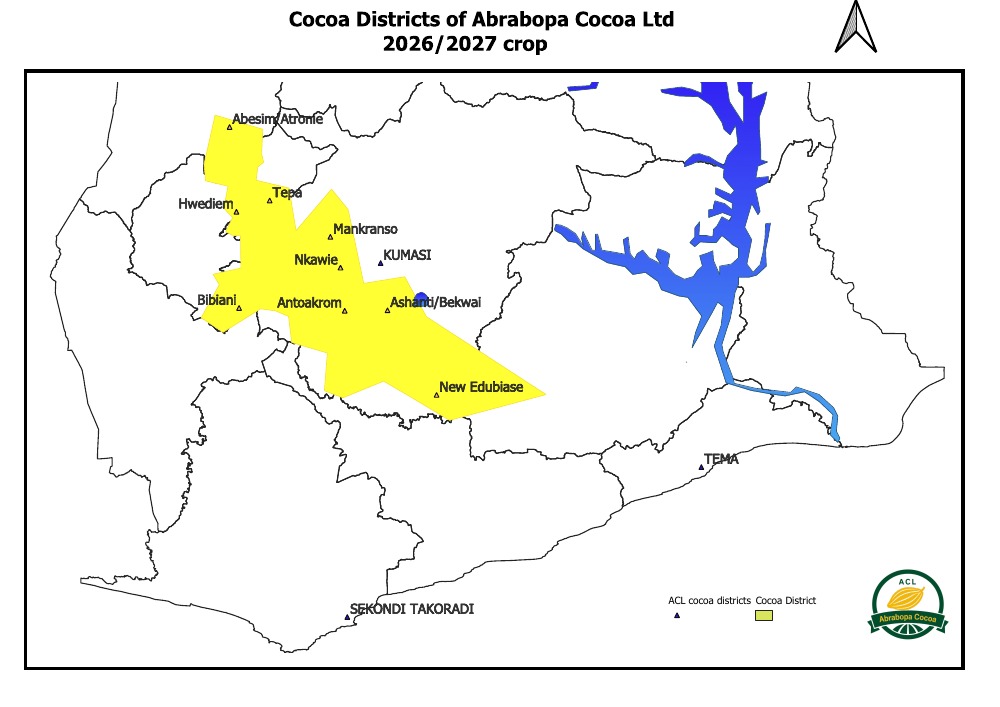
2026/27 operating footprint

Our cocoa districts.

The supplied 2026/27 map identifies nine cocoa districts: Abesim/Atronie, Hwediem, Tepa, Mankranso, Nkawie, Bibiani, Antoakrom, Ashanti Bekwai and New Edubiase. Select a district on the map or in the list below to view its warehouse information and available photographs.

District labels are clickable. Open the original PDF map.

Who we serve

Built for farmers and disciplined field teams.

CAA farmers

Purchasing relationships supported by established farmer organisation structures.

Other Ghanaian farmers

A simplified, professional purchasing pathway with essential farmer and transaction information.

Collectors & field officers

Clear procedures and reliable records that help teams buy and account for cocoa correctly.

Farmer value proposition

More than a buying transaction.

Our operating model places the farmer relationship at the centre of growth, with practical services designed to improve convenience, productivity and long-term participation.

Convenient access

Buying points are selected for accessibility and visibility, helping reduce the distance farmers travel to sell their cocoa.

Knowledge & productivity

Farmer education focuses on cocoa as a viable agribusiness, good agronomic practices, quality improvement and climate-smart production.

Services & inclusion

We aim to connect farmers with approved input and service providers and expand secure electronic payment options where operationally available.

Quality & compliance

Good cocoa enters the chain. Independent checks protect it.

Quality assurance begins before purchase and continues through depot preparation, grading, sealing, dispatch and takeover.

Purchase quality

Field teams accept thoroughly dried cocoa that meets the required buying standard and explain any concern that prevents acceptance.

Depot preparation

Received cocoa is identified, recorded and arranged into controlled parcels ready for independent Quality Control Company examination.

Grade, seal & release

Cocoa that meets the required standard is graded and sealed before authorised evacuation. Any rejected or segregated parcel is corrected before release.

Tools that support the operation

Practical equipment for safe buying and handling.

Buying points and depots need the right basic tools to weigh accurately, protect cocoa, prepare parcels and maintain visible operating standards.

Accurate weighing

Approved weighing scales, test weights and visible scale checks support accurate transactions and farmer confidence.

Moisture & ground protection

Tarpaulins, gratings and clean working surfaces help keep cocoa away from moisture, dirt and avoidable contamination during handling.

Bagging & identification

Jute sacks, twine, stencil ink and brushes support proper bag closure and visible identification of cocoa prepared for depot control.

Quality preparation

Sieves, shanking boards and appropriate handling tools support segregation or reconditioning when a parcel needs attention before grading.

Buying-point visibility

Clear signboards and an orderly work area help farmers identify approved buying points and understand where authorised transactions take place.

Record materials

Receipts, stock records, waybills and approved digital tools provide the references used to follow cocoa and reconcile each handover.

The purchasing journey

Five controlled stages. One accountable transaction.

The process connects the farmer’s delivery to quality assurance, approved evacuation and final reconciliation.

Purchase

Inspect, weigh, record and complete payment for approved cocoa at the farmer or society buying point.

Primary evacuation

Move purchased cocoa promptly from the buying point to the assigned district depot or warehouse.

Grade & seal

Prepare stocks for QCC examination, grading and sealing, with any quality concern corrected before release.

Secondary evacuation

Dispatch approved cocoa with the required waybill and supporting documents to the designated takeover centre.

Take over & reconcile

Confirm the delivery record, close the stock movement and reconcile the operational and financial references.

Records that move with the cocoa

The information is part of the chain.

Physical cocoa and operational information should remain connected from purchase to handover.

Purchase details establish who delivered, where the transaction took place and what weight was accepted. Warehouse records show what was received, where it is held and what remains available. Dispatch and delivery references then close the movement and support the final reconciliation.

This connected view helps field, finance, warehouse and logistics teams work from the same story. It also gives management a clearer basis for action.

Technology & reporting

Better information for faster, clearer decisions.

Our technology direction is to connect field activity to head-office oversight without making the farmer’s transaction complicated.

Digital purchase capture

Structured digital records can connect the farmer, buying point, accepted weight, receipt and payment reference at the source of the transaction.

District-to-head-office reporting

Linked reporting helps management compare purchases, funding, stock positions and evacuation performance across operating districts.

Electronic payments

Secure electronic payment options, including mobile money where approved and available, can improve convenience, financial inclusion and transaction visibility.

Early-warning information

Timely reporting helps identify delayed evacuation, unresolved stock differences, missing references or other issues that require management attention.

Operational returns

Consistent records support the periodic returns, management reports and reconciliations required to account for licensed buying activity.

Continuous improvement

Information from field, quality, finance, warehouse and logistics teams is used to improve procedures, training and turnaround performance.

Sustainability in the relationship

Helping farmers protect productivity and long-term value.

A sustainable purchasing relationship must create value beyond the day cocoa is sold.

Our farmer engagement supports the economic, social and environmental dimensions of cocoa production. Education can help farmers treat cocoa as a business, improve agronomic decision-making, protect bean quality and understand how climate-smart practices strengthen farm resilience.

We also seek practical partnerships that connect farmers to approved input and agrochemical providers, productivity services and secure payment channels. These services are introduced responsibly and communicated clearly so farmers understand the terms, the benefit and the point of contact for support.

Where we work alongside Cocoa Abrabopa Association, the two organisations maintain their separate mandates: CAA leads farmer organisation and development, while ACL remains responsible for the commercial purchasing and movement of cocoa.

Warehousing in the supply chain

From receiving cocoa to preparing dispatch.

Our warehouses connect purchasing with storage, stock verification, quality checks and evacuation. Explore warehouse operations, district information and available photographs below.

Explore warehouse operations View warehouse locations and photos

Start a conversation

Build your next cocoa relationship on clarity and control.

Speak with our team →